

INCOSE Guide to Writing Requirements
Document No.: INCOSE-TP-2010-006-04
Date: 1 July 2023
Prepared by:
International Council on Systems Engineering
7670 Opportunity Road, Suite 220,
San Diego, California 92111-2222 USA
Authors
Mike Ryan, Capability Associates Pty Ltd, Australia
Lou Wheatcraft, Wheatland Consulting, LLC, USA
Major Contributors
Those who made a significant contribution to the generation of the Guide are:
Kathy Baksa, Pratt & Whitney, USA
Ronald S. Carson, Retired, USA
Jeremy Dick, Retired, UK
José Fuentes, The Reuse Company, Spain
José Llorens, The Reuse Company, Spain
José Pereira, The Reuse Company, Spain
IIyes Yousfi, The Reuse Company, Spain
Rick Zinni, L3Harris Corporation, USA
Purpose
The purpose of the Guide to Writing Requirements is to describe how to express need statements (needs) and requirement statements (requirements) clearly and precisely in textual form to support further analysis and implementation, independent of any systems engineering (SE) tool that may be used to capture and manage those needs and requirements throughout the system lifecycle. Clear, concise needs and requirements are less taxing to interpret as well as simpler to verify, validate, and to identify defects. This, in turn, helps avoid costly rework, schedule slips, and needs and requirements not being realized.
The aim is to draw together advice from existing standards such as ISO/IEC/IEEE 15288 and ISO/IEC/IEEE 29148 along with best practices from the authors, contributors, and reviewers into a single, comprehensive set of characteristics and rules for well-formed need and requirement statements using a structured, natural language.
As shown in Figure 1, the Guide complements and is aligned with the INCOSE Needs and Requirements Manual (NRM) in support of the INCOSE Systems Engineering Handbook (INCOSE SE HB) and the Systems Engineering Body of Knowledge (SEBoK).
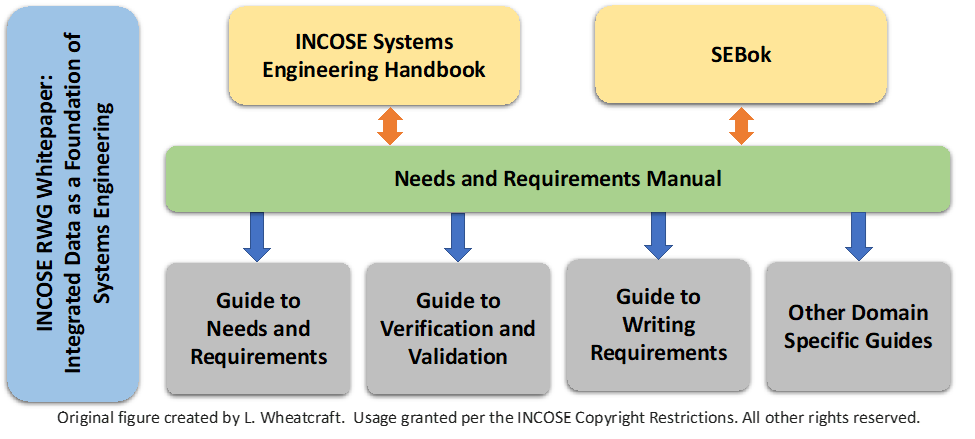
Figure 1: Relationships Among RWG Products
To better understand the context of the material presented in the Guide, the reader is encouraged to review the underlining concepts and activities within the NRM as well as the related guides: Guide to Needs and Requirements (GtNR) and the Guide to Verification and Validation (GtVV), and domain-specific guides such as the Guide to Security Needs and Requirements. Additional information is provided in the RWG Whitepaper Integrated Data as a Foundation of Systems Engineering. The GtWR is also supported by a useful Summary Sheet.
Scope
The GtWR:
Provides practical, cross domain guidance, with examples, which will enable project teams to define well-formed need and requirement statements, need and requirement expressions, and sets of needs and requirements.
Provides a definitive source that organizations can reference when developing and documenting a set of rules, guidelines, processes, methods, and templates that are tailored to their specific organizational needs, unique culture, domain, and product line.
Defines a set of characteristics that should be possessed by well-formed needs, requirements, sets of needs, and sets of requirements to give design teams the best basis to create an architecture and resulting design that will satisfy, as fully as possible, the baselined sets of needs and associated requirements.
Provides a set of rules for writing needs and requirements that will result in the relevant need and requirement statements having the desired characteristics.
Addresses the concept of a boilerplate, template, or pattern for need and requirement statements.
The Guide is not about the discovery, capture, or elicitation of requirements; nor is it about needs and requirements analysis, needs and requirements management, and the development of models or design outputs. Those key activities are discussed in the NRM and the GtNR.
Furthermore, although the Guide focuses on textual statements, it does not presume to preclude the use of other means of addressing needs and requirements and their attributes, such as the use of visual models. Approaches such as those contained in SysML diagrams or MBSE tools can be powerful; however, the details of graphical requirements (in or outside a given tool) are outside the scope of the Guide.
The characteristics and rules for needs and requirements discussed in the Guide apply to needs and requirements for any entity no matter the level within an organization or system architecture. As such, they also apply to the business requirements and stakeholder needs and requirements resulting from the ISO/IEC/IEEE 15288 and INCOSE SE HB technical processes: Business and Mission Analysis, Stakeholder Needs and Requirements Definition, and System Requirements Definition.
Supplementary Material
You may be interested in this other supplementary material :
Related Systems Engineering Books
You may be interested in the following related books:
R. Faulconbridge and M. Ryan, Applied Systems Engineering, 2nd ed, Artech House, 2026.
R. Faulconbridge and M. Ryan, Managing Complex Technical Projects, 2nd ed, Artech House, 2026.
M. Ryan, Requirements Practice in Conceptual Design, 2nd ed, Artech House, 2026.
edVirtus Systems Engineering Courses
If you are interested in requirements writing, you may be interested in the edVirtus course:
You may be interested in the related courses:
Three-day Systems Engineering—Introduction.
Five-day Systems Engineering—Advanced.
Return to the Requirements Writing Course