

INCOSE Guide to Needs and Requirements:
Purpose, Scope, and Content
The INCOSE Guide to Needs and Requirements (GtNR) is one of the most influential documents produced by the INCOSE Requirements Working Group (RWG). It provides a comprehensive, authoritative framework for understanding, developing, analysing, and managing needs and requirements throughout the system life cycle. While the INCOSE Systems Engineering Handbook provides highlevel process descriptions, the Guide to Needs and Requirements expands these into detailed, practical guidance that helps practitioners produce clear, correct, complete, and verifiable requirements—the foundation of successful systems engineering.
Purpose of the Guide
The guide exists to address one of the most persistent challenges in systems engineering: poorly written or poorly understood requirements. Its core purposes include:
1. Establishing a Common Understanding of Needs and Requirements
The guide clarifies the distinctions between:
Stakeholder needs
System requirements
Design constraints
Verification requirements
Validation criteria
This shared understanding is essential because ambiguity in terminology leads directly to ambiguity in system behaviour.
2. Providing Practical Guidance for Requirements Development
The guide offers detailed instruction on:
Eliciting stakeholder needs
Analysing and refining needs into requirements
Writing highquality requirement statements
Ensuring requirements are testable, feasible, and unambiguous
Managing requirements throughout the life cycle
It is designed to be used by systems engineers, business analysts, project managers, and domain specialists.
3. Improving System Quality and Reducing Project Risk
Clear, correct requirements reduce:
Rework
Cost overruns
Schedule delays
Integration failures
Verification difficulties
The guide helps organisations avoid these pitfalls by promoting disciplined requirements engineering.
4. Supporting Consistency Across Projects and Organisations
The guide provides a standardised approach that can be applied across industries, enabling:
Common training
Consistent documentation
Improved communication
Better supplier–customer alignment
5. Complementing Other INCOSE and International Standards
As shown in Figure 1, the Guide complements and is aligned with the INCOSE Needs and Requirements Manual (NRM) in support of the INCOSE Systems Engineering Handbook (INCOSE SE HB) and the Systems Engineering Body of Knowledge (SEBoK) as well as standards such as ISO/IEC/IEEE 15288 and ISO/IEC/IEEE 29148. It complements by expanding the V&V processes into a deeper, more actionable body of knowledge for practitioners working on complex systems in any domain.
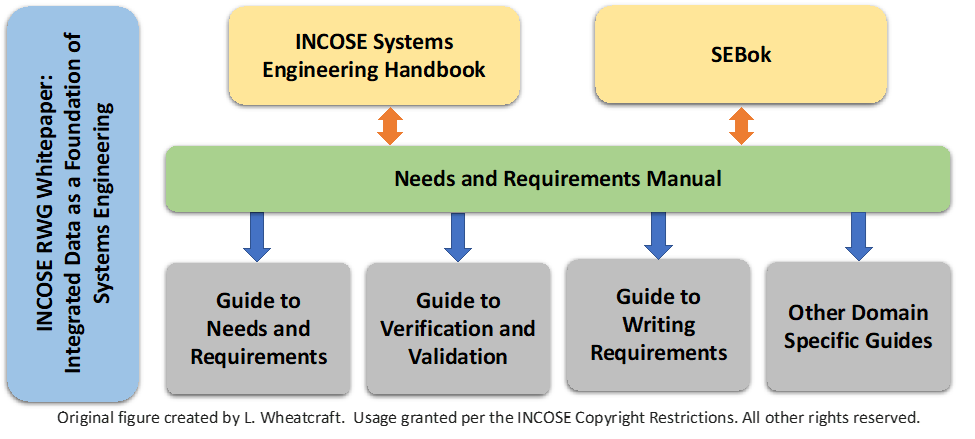
Figure 1: Relationships Among RWG Products
To better understand the context of the material presented in the Guide, the reader is encouraged to review the underlining concepts and activities within the NRM as well as the related guides: Guide to Writing Requirements (GtWR), and the Guide to Verification and Validation (GtVV),and domain-specific guides such as the Guide to Security Needs and Requirements. Additional information is provided in the RWG Whitepaper Integrated Data as a Foundation of Systems Engineering. The GtWR is also supported by a useful Summary Sheet.
Together, these documents form a coherent requirementsengineering ecosystem.
Scope of the Guide
The Guide to Needs and Requirements covers the full spectrum of requirementsrelated activities across the system life cycle. Its scope includes:
1. Needs Definition
The guide explains how to identify, analyse, and document:
Stakeholder needs
Operational needs
Mission needs
Business needs
User needs
It emphasises that needs are not requirements, but the foundation from which requirements are derived.
2. Requirements Definition
The guide covers:
System requirements
Functional and performance requirements
Interface requirements
Environmental and regulatory requirements
Nonfunctional requirements (safety, security, reliability, usability, etc.)
It provides detailed criteria for what makes a requirement “good.”
3. Requirements Analysis
This includes:
Checking for completeness and correctness
Identifying conflicts and inconsistencies
Allocating requirements to system elements
Prioritising requirements
Tracing requirements to needs and design
4. Requirements Verification and Validation
The guide explains how to ensure:
Requirements are verifiable (verification planning)
Requirements are valid (traceable to real stakeholder needs)
5. Requirements Management
The guide addresses:
Change control
Configuration management
Traceability
Baselines
Requirements reviews
6. Tailoring for Different Domains and Life Cycle Models
The guidance applies to:
Traditional waterfall development
Agile and iterative development
Model-based systems engineering (MBSE)
Softwareintensive systems
Hardwarecentric systems
Safetycritical and missioncritical systems
Content Overview
Although the exact structure varies by edition, the Guide to Needs and Requirements typically includes the following major sections:
1. Introduction and Concepts
This section defines:
Needs vs. requirements
Types of requirements
The role of requirements in systems engineering
Common terminology
It establishes the conceptual foundation for the rest of the guide.
2. Needs Definition Process
This section describes:
Elicitation techniques
Stakeholder analysis
Operational context development
Mission analysis
Problem definition
It emphasises that highquality requirements begin with highquality needs.
3. Requirements Definition Process
This is the core of the guide. It includes:
Transforming needs into requirements
Writing wellformed requirement statements
Using templates and patterns
Avoiding common pitfalls (ambiguity, unverifiable terms, design bias)
The guidance aligns with the principles summarised in the Guide to Writing Requirements summary sheet you have open, such as clarity, singularity, necessity, and verifiability.
4. Requirements Quality Characteristics
The guide defines the characteristics of good requirements, such as:
Correct
Complete
Feasible
Necessary
Unambiguous
Verifiable
Traceable
Implementationfree
These characteristics are central to INCOSE’s requirements philosophy.
5. Requirements Analysis and Allocation
This section covers:
Logical decomposition
Functional analysis
Requirements allocation to subsystems
Interface definition
Trade studies and decision analysis
6. Requirements Verification and Validation
The guide explains how to:
Plan verification
Define validation criteria
Trace requirements to test methods
Manage anomalies
7. Requirements Management
This includes:
Baselines
Change management
Traceability matrices
Requirements reviews
Configuration control
8. Appendices and Reference Material
These often include:
Examples of good and bad requirements
Templates and checklists
Glossaries
Mappings to standards
Domainspecific guidance
Why the Guide Matters
The INCOSE Guide to Needs and Requirements is essential because it:
Provides deep, practical guidance beyond what standards offer
Helps organisations produce highquality requirements that reduce risk
Supports training, certification, and capability development
Aligns with global standards and best practices
Improves communication between stakeholders, engineers, and suppliers
Strengthens the foundation for successful system design, integration, and verification
For systems engineers, requirements engineers, and project managers, it is one of the most important resources for ensuring that systems are built to meet real needs and deliver real value.
Supplementary Material
You may be interested in this other supplementary material :
Related Systems Engineering Books
You may be interested in the following related books:
R. Faulconbridge and M. Ryan, Applied Systems Engineering, 2nd ed, Artech House, 2026.
R. Faulconbridge and M. Ryan, Managing Complex Technical Projects, 2nd ed, Artech House, 2026.
M. Ryan, Requirements Practice in Conceptual Design, 2nd ed, Artech House, 2026.
edVirtus Systems Engineering Courses
If you are interested in requirements writing, you may be interested in the edVirtus course:
You may be interested in the related courses:
Three-day Systems Engineering—Introduction.
Five-day Systems Engineering—Advanced.
Return to the Requirements Writing Course