

INCOSE Guide to Verification and Validation:
Purpose, Scope, and Content
The INCOSE Guide to Verification and Validation (V&V) is one of the International Council on Systems Engineering’s most important technical guides, providing authoritative, practical, and detailed direction on how to plan, execute, and manage verification and validation activities across the system life cycle.
As shown in Figure 1, the Guide complements and is aligned with the INCOSE Needs and Requirements Manual (NRM) in support of the INCOSE Systems Engineering Handbook (INCOSE SE HB) and the Systems Engineering Body of Knowledge (SEBoK) as well as standards such as ISO/IEC/IEEE 15288 and ISO/IEC/IEEE 29148. It complements by expanding the V&V processes into a deeper, more actionable body of knowledge for practitioners working on complex systems in any domain.
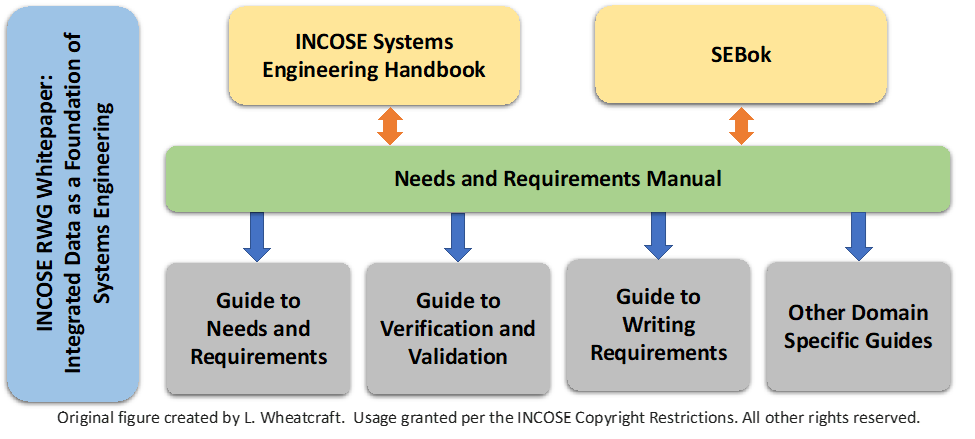
Figure 1: Relationships Among RWG Products
To better understand the context of the material presented in the Guide, the reader is encouraged to review the underlining concepts and activities within the NRM as well as the related guides: Guide to Needs and Requirements (GtNR) and the Guide to Writing Requirements (GtWR), and domain-specific guides such as the Guide to Security Needs and Requirements. Additional information is provided in the RWG Whitepaper Integrated Data as a Foundation of Systems Engineering. The GtWR is also supported by a useful Summary Sheet.
Purpose of the INCOSE Guide to Verification and Validation
The guide exists to bring clarity, consistency, and rigour to the practice of V&V. Its primary purposes include:
1. Establishing a Common Understanding of V&V
Verification and validation are often misunderstood or conflated. The guide clarifies:
Verification: “Did we build the system right?”
Validation: “Did we build the right system?”
By defining terminology, principles, and expected outcomes, the guide ensures that engineers, managers, and stakeholders share a common understanding of what V&V entails and why it matters.
2. Providing Practical, Actionable Guidance
Where the SE Handbook provides highlevel process descriptions, the V&V Guide dives into:
How to plan V&V
How to select methods
How to design tests
How to trace requirements to evidence
How to evaluate results and manage anomalies
Its purpose is to help practitioners do V&V effectively, not just understand it conceptually.
3. Supporting Quality, Safety, and Mission Success
V&V is essential for ensuring that systems:
Meet requirements
Are safe to operate
Perform reliably
Satisfy stakeholder needs
Comply with regulations
The guide provides the structure needed to reduce risk and increase confidence in system performance.
4. Enabling Tailored, Scalable V&V Approaches
The guide recognises that V&V must be adapted to system complexity, development model, and domain. It provides principles for tailoring V&V activities to:
Agile and iterative development
Model-based systems engineering (MBSE)
Softwareintensive systems
Hardwarecentric systems
Safetycritical domains
5. Supporting Professional Development and Organisational Maturity
The guide is widely used by organisations to:
Train systems engineers
Develop V&V capability
Improve process maturity
Support certification and audits
It is also a key reference for INCOSE certification candidates.
Scope of the INCOSE V&V Guide
The guide covers the full breadth of V&V activities across the system life cycle. Its scope includes:
1. All System Types
The guidance applies to:
Physical systems
Software systems
Cyberphysical systems
Service systems
Enterprise and sociotechnical systems
2. All Life Cycle Stages
The guide addresses V&V activities from early concept through disposal:
Concept validation
Requirements verification and validation
Architecture and design verification
Component and subsystem verification
Systemlevel verification
Operational validation
Sustainment and modification V&V
3. Processes, Methods, and Techniques
The guide covers a wide range of V&V methods, including:
Inspection and review
Analysis and modelling
Simulation
Demonstration
Testing (component, subsystem, system, acceptance)
Operational evaluation
4. Planning and Management
The guide provides detailed direction on:
V&V planning
Test strategy development
Requirements traceability
Evidence management
Anomaly reporting and resolution
Riskbased V&V
5. Integration with Other Disciplines
The guide explains how V&V interacts with:
Requirements engineering
Architecture and design
Specialty engineering (safety, reliability, human factors)
Project management
Configuration management
Content Overview
While the exact structure varies by edition, the INCOSE V&V Guide typically includes the following major sections:
1. Introduction to V&V
This section defines verification and validation, explains their importance, and describes how they fit into the systems engineering life cycle. It also introduces key concepts such as:
Requirements quality
Traceability
Evidencebased assurance
V&V roles and responsibilities
2. V&V Planning
A major portion of the guide is devoted to planning, including:
Developing a V&V strategy
Creating a V&V plan
Identifying required resources
Establishing success criteria
Integrating V&V with project schedules
The guide emphasises that effective V&V begins early and is integrated throughout development.
3. V&V Methods and Techniques
This section provides detailed descriptions of V&V methods, including:
Inspection: peer reviews, walkthroughs, audits
Analysis: mathematical modelling, static analysis, reliability analysis
Demonstration: functional demonstrations, prototypes
Test: unit, integration, system, acceptance, regression
Simulation: digital twins, MBSEbased simulation
For each method, the guide describes:
Purpose
Strengths and limitations
Typical inputs and outputs
When to use it
4. Requirements Verification and Validation
The guide provides deep guidance on:
Ensuring requirements are correct, complete, and testable
Tracing requirements to V&V activities
Managing derived and nonfunctional requirements
Validating stakeholder needs
5. Conducting V&V
This section covers the execution of V&V activities:
Preparing test environments
Conducting tests and demonstrations
Collecting and analysing data
Managing anomalies and deviations
Documenting results
6. V&V in Different Life Cycle Models
The guide explains how to adapt V&V for:
Waterfall
Incremental
Agile
Spiral
Hybrid models
7. V&V in Specialty Domains
Many editions include domainspecific guidance, such as:
Safetycritical systems
Missioncritical systems
Softwareintensive systems
Humanmachine systems
8. Appendices and Reference Material
These often include:
Templates
Checklists
Example V&V plans
Glossaries
Mappings to standards (e.g., ISO/IEC/IEEE 15288, DO178C, MILSTD810)
Why the INCOSE V&V Guide Matters
The guide is widely valued because it:
Provides practical, detailed guidance beyond what standards offer
Helps organisations reduce risk and improve system quality
Supports regulatory compliance in safetycritical industries
Strengthens requirements quality and traceability
Enables consistent, repeatable V&V practices
Supports professional development and certification
For systems engineers, test engineers, and project managers, it is one of the most important resources for ensuring that systems are built correctly and meet the needs they were intended to satisfy.
Supplementary Material
You may be interested in this other supplementary material :
Related Systems Engineering Books
You may be interested in the following related books:
R. Faulconbridge and M. Ryan, Applied Systems Engineering, 2nd ed, Artech House, 2026.
R. Faulconbridge and M. Ryan, Managing Complex Technical Projects, 2nd ed, Artech House, 2026.
M. Ryan, Requirements Practice in Conceptual Design, 2nd ed, Artech House, 2026.
edVirtus Systems Engineering Courses
If you are interested in requirements writing, you may be interested in the edVirtus course:
You may be interested in the related courses:
Three-day Systems Engineering—Introduction.
Five-day Systems Engineering—Advanced.
Return to the Requirements Writing Course